Loading…
The Rebbe
The Rebbe
Rabbi Menachem M. Schneerson, of righteous memory — the seventh Rebbe of Chabad-Lubavitch, and the reason there is a Chabad House on Almaden Expressway at all.
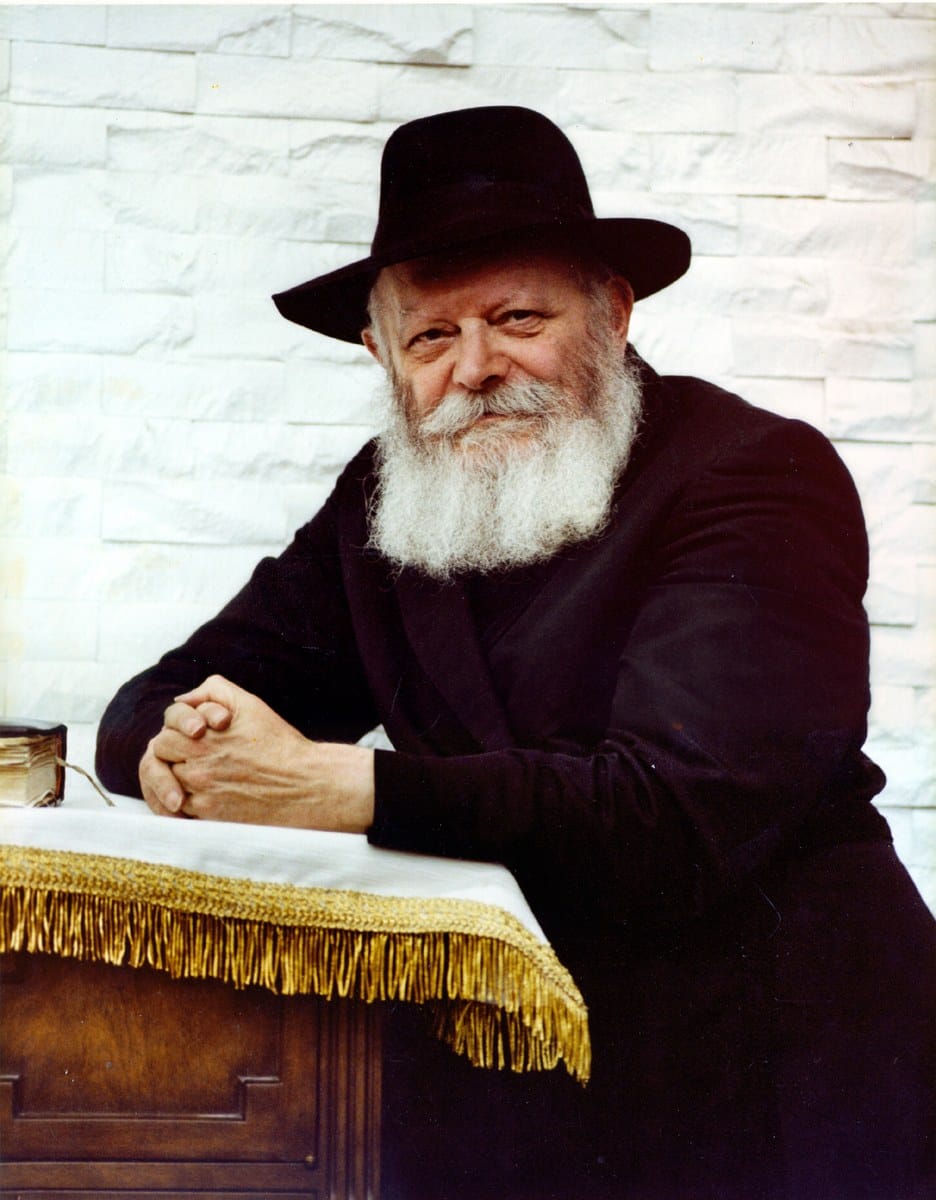
The idea that produced this building
In 1951 Chabad was a small movement of survivors. What the Rebbe did with it was to send its best young couples away from it — not to build a center in Brooklyn, but to leave for places with no Jewish infrastructure at all and stay there for the rest of their lives. They are called shluchim, emissaries, and there are now thousands of them, in more than a hundred countries.
A shliach is not posted somewhere for a term. He and his wife move there, raise their children there, and it becomes their home — which is why the Chabad House you walk into is somebody’s actual house and why nobody there is counting whether you came last week. That is the arrangement that put a rabbi and rebbetzin in Almaden Valley. Ours are here.
One sentence, said more than any other
Underneath it is a single idea, stated more often than any other in forty years of talks: that every Jew is whole, already, regardless of what they know or keep or believe, and that the job is never to make somebody into a Jew but to help them do one more Jewish thing than they did yesterday. There is no membership at this Chabad House because of that sentence, not as a marketing decision.
The life, briefly
Born in Nikolaev, in what is now Ukraine, on the eleventh of Nisan, 1902, into a family of scholars: his father, Rabbi Levi Yitzchak Schneerson, was the rabbi of Yekaterinoslav and died in Soviet exile for refusing to bend.
He studied in Berlin and then in Paris, where he took a degree in engineering at the Sorbonne, and married Rebbetzin Chaya Mushka, daughter of the sixth Lubavitcher Rebbe. The couple escaped occupied Europe in 1941 and reached New York.
He accepted the leadership of Chabad-Lubavitch in 1951, a year after his father-in-law’s passing, and led it from 770 Eastern Parkway in Brooklyn until his own on the third of Tammuz, 1994. He had no children. He never gave the movement a successor, and it has not had one.
What he actually asked people to do
The Rebbe was suspicious of inspiration that did not turn into an action by the end of the day. From the 1960s onward he set out a series of Mitzvah campaigns — ten of them — each one a specific, finishable thing a person could do without changing their life first. They are still what Chabad does.
Ahavas Yisroel
Love of a fellow Jew, treated as an obligation rather than a sentiment. Everything else on this list rests on it.
Jewish education
For every Jewish child, and for adults who never had any. This Chabad House exists to do this one.
Torah study
Every day, however briefly. Fifteen minutes kept is worth more than an hour intended.
Tefillin
Begun during the Six-Day War in 1967, and the reason a Chabad student may stop you in the street. It takes two minutes and there is no commitment in it.
Mezuzah
On the doorposts of a Jewish home. The Rebbe asked people to have theirs checked as well as put up.
Tzedakah
A coin in a box, most days, in small amounts. The habit was the point rather than the sum.
Jewish books
A house with Jewish books in it — a Chumash, a Tehillim, a Tanya — where children can reach them.
Shabbos candles
Lit by women and girls before sunset on Friday. The Rebbe asked that girls light from the age their mothers do, each with her own candle.
Kashrus
Keeping kosher, begun anywhere — one shelf, one set of dishes, one decision at a time.
Family purity
Taharas hamishpacha and the mikvah, which the Rebbe considered the foundation of a Jewish home.
The teaching itself
He spoke for hours, without notes, at gatherings called farbrengens, and the transcripts fill shelves: Likkutei Sichos alone runs to thirty-nine volumes, alongside many more of correspondence. The subject was Chassidus — the inner dimension of Torah as Chabad teaches it — brought down to something a person could use on a Tuesday.
He also asked for daily study that anyone could keep: Chitas, a portion of Chumash with Rashi, a portion of Tehillim and a section of Tanya each day, about fifteen minutes; and a daily portion of Rambam, so that Jews across the world would be learning the same thing on the same day. Both are on the Torah page, with where to start.
His concern reached well past his own community. He pressed for a moment of silence in American public schools, for the education of children of every faith in the seven Noahide laws, and for public responsibility from people in office — and he is the only religious leader to have received the Congressional Gold Medal, awarded in 1994. Education and Sharing Day has been proclaimed in the United States on his birthday every year since 1978.
Moshiach
The Rebbe spoke about the coming of Moshiach and the final redemption more, and more urgently, than about almost anything else. Belief in it is ancient and mainstream in Judaism — it is one of the Rambam’s thirteen principles of faith — and what was distinctive was the insistence that it is close, that it is the business of ordinary people, and that it is brought nearer by acts rather than by waiting.
After Gimmel Tammuz
The Rebbe passed away on the third of Tammuz, 5754 — June 1994 — and is buried in Queens, beside his father-in-law, at the place known as the Ohel. Chabad has more than doubled in size since.
People have written letters to the Rebbe for as long as there has been a Rebbe to write to, and they still do, tens of thousands a year, which are brought to the Ohel and taken in. You can write one here; it goes straight there, and nobody reads it, at this end or that one.